Vienna Team Builds First Self-Stabilizing Nuclear Clock
Physicists in Vienna have built a new kind of clock that keeps itself on time. The team at TU Wien, the Vienna University of Technology, says it is the first nuclear clock that can stabilize itself without leaning on a normal atomic clock. In tests it ran steadily for more than 24 hours with no one stepping in.
Most precise clocks today use electrons in atoms as their reference. This one uses the tiny core of the atom instead: the nucleus of thorium. Thorium is special because two of its nuclear energy states sit unusually close together, so a laser can flip the nucleus from one state to the other. Nuclei are also more than 10,000 times smaller than atoms, which makes them far less bothered by heat and other outside noise.
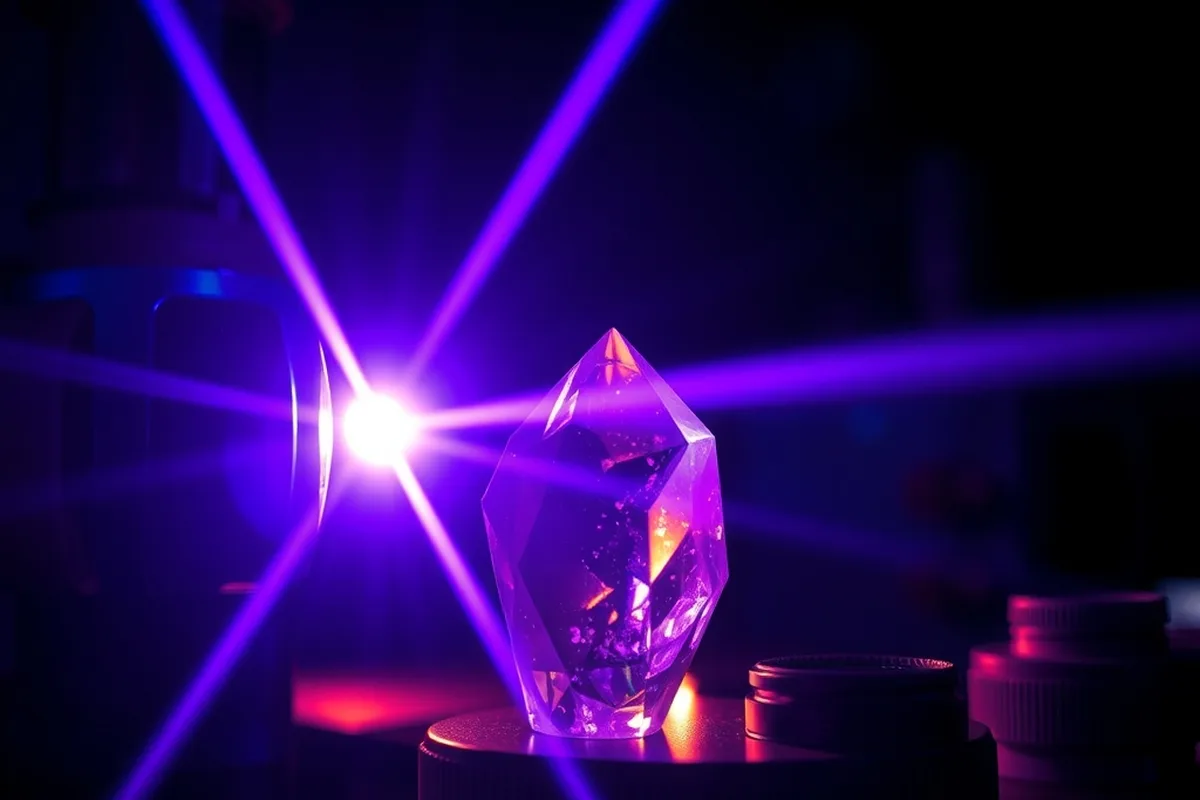
The trick is a feedback loop. A laser shines on a crystal that holds thorium atoms. The nuclei only soak up the light when the laser has exactly the right frequency. If the laser starts to drift, less light is absorbed, the system notices, and it nudges the laser back on track.
Over a day of testing, the prototype reached a relative precision of about 10 to the power of minus 15. That is like losing roughly one second over 30 million years. The researchers are honest that it is not yet as good as the best optical atomic clocks, but lead scientist Thorsten Schumm called it a fantastic result for a first prototype.
Next, the team plans stronger lasers and better thorium crystals. Better clocks could also sharpen many other measurements in physics. The work was published in the journal Nature.