Europe Launches FLEX to Watch Plants Breathe
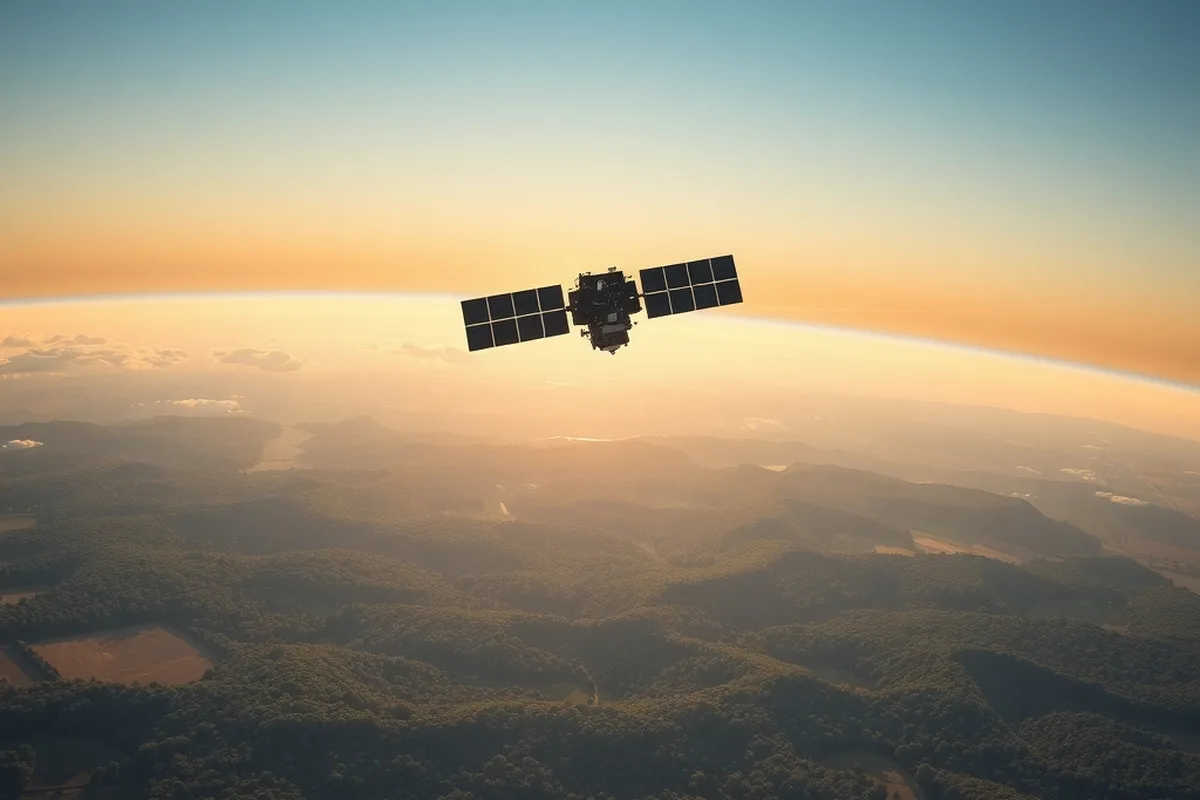
Europe now has a new way to check on the health of the world's plants from orbit. The European Space Agency launched two Earth-watching satellites, FLEX and Copernicus Sentinel-3C, together on a single Vega-C rocket from Europe's Spaceport in French Guiana. Lift-off came at 03:21 CEST on 15 September, which was still the evening of 14 September at the launch site.
A new adapter called Vespa let the two satellites ride stacked inside the rocket. Sentinel-3C was released first, and FLEX followed about an hour later. ESA's control centre in Germany then picked up the first signal from each one, confirming both were safe and talking to the ground.
FLEX is the star of the show for plant lovers. It is ESA's first satellite built to measure photosynthesis from space. When plants soak up sunlight, they give off a very faint glow called fluorescence. Our eyes cannot see it, but FLEX's special instrument can. That glow tells scientists how well plants are turning sunlight and carbon dioxide into energy, and how they cope with stress such as heat or drought.
Sentinel-3C joins an existing family of satellites that measure oceans, land, ice and air, including sea temperature, ocean colour and the water level of lakes and rivers. It supports Europe's Copernicus services for forecasting and climate monitoring.
The two missions will also work as a team. FLEX will first fly in tandem with Sentinel-3A, and later Sentinel-3C will take that place. Combining their data should give scientists a clearer picture than ever of how the planet's vegetation is doing.